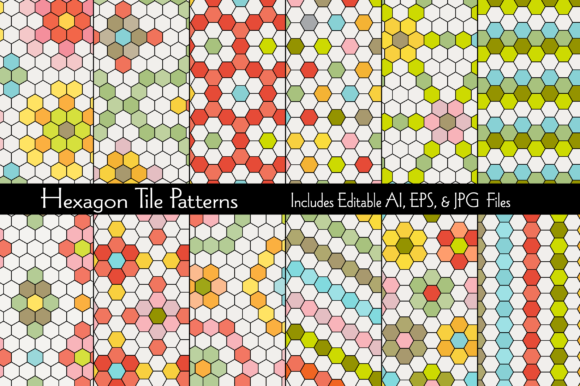
Hexagon Tile Patterns
Geometric shapes have dominated design conversations for years, but few carry the same enduring appeal as the hexagon. Hexagon tile patterns bring together mathematical precision and artistic fluidity, creating surfaces that feel both structured and organic. Unlike squares or rectangles that rely on straight grids, hexagons build through interlocking edges, resulting in a honeycomb effect that catches light, guides the eye, and transforms ordinary floors, walls, and backsplashes into features worth noticing. The shape works quietly in the background or boldly at the foreground, depending on color, scale, and placement, and that versatility explains why designers, homeowners, landlords, and business owners keep returning to it. Hexagon tile patterns are not a passing fad. They are a spatial strategy that balances rhythm, depth, and texture in ways few other geometric layouts can match.
The Geometry That Makes Hexagons Work
Tessellation is the silent power behind every tile layout, and hexagons tessellate perfectly. Six equal sides meet at 120-degree angles, leaving no awkward gaps when tiles are fitted together. This natural efficiency first caught attention in nature—beehives, basalt columns, and even the structure of snowflakes—and it translates directly into design. Three hexagons always converge at a single point, distributing weight and visual attention evenly. For a floor installation, that means fewer grout lines that run in a single linear direction, which can make a room feel wider or more fluid. For a wall, the repetition becomes almost meditative without feeling rigid. The lack of sharp 90-degree corners softens transitions, so hexagon patterns often feel more inviting than standard subway layouts or square grids that can read as blocky in small spaces.
Mathematically, hexagons offer maximal area coverage with minimal perimeter compared to other shapes that tile the plane. In practical terms, that translates into designs where individual tiles don’t compete; they cooperate. Someone walking into a café with a hexagonal tiled floor won’t consciously count tiles. They’ll notice a sense of flow. That subconscious effect is the geometry doing its job. Designers leverage this to create movement in narrow hallways, define shower areas without physical barriers, or anchor a kitchen island with a distinct tiled zone that doesn’t visually fragment the room.
Why Hexagon Patterns Are Reshaping Modern Interiors
The last decade shifted how people think about their homes and workspaces. More time spent indoors meant a greater appreciation for surfaces, textures, and the small details that shape mood. Hexagon tile patterns surged because they offer a midpoint between minimalism and ornamentation. A monochromatic hexagon floor is cleaner than patterned encaustic tiles but far more dynamic than large-format rectangles. That subtle complexity aligns perfectly with current desires for calming yet interesting spaces. There’s no need to choose between serenity and statement. Hexagons deliver both.
Another driving factor is the rise of biophilic design. Natural materials and organic forms are everywhere in contemporary architecture, and the hexagonal shape echoes honeycomb, coral, and cellular structures. Pair matte porcelain hexagon tiles in warm clay tones with wooden cabinetry, and the space feels connected to nature without literal leaf motifs. Similarly, the wellness industry—spas, yoga studios, high-end salons—adopts hexagon layouts to signal order and tranquility. Small hexagon mosaics on a steam shower floor recall pebble arrangements, while large-format hexagons in a retail space guide foot traffic almost subliminally.
Beyond the Classic White: Color, Contrast, and Scale
Many people picture stark white hexagon tiles from early 20th-century bathrooms, and that heritage is still popular, but the modern palette has exploded. Deep charcoal hexagons with pale grout can anchor a loft apartment. Matte blush pink or sage hexagons turn a laundry room into a deliberate design choice rather than an afterthought. The grout color itself becomes a design tool. A contrasting grout emphasizes the geometry, making each tile read individually. A matching grout blends the pattern into a seamless surface that feels larger and quieter.
Scale plays an equally powerful role. A 10-inch hexagon reads differently than a 2-inch mosaic. Larger tiles reduce grout lines and create a contemporary, almost monolithic effect—ideal for open-plan living areas or commercial lobbies. Smaller hexagons offer texture and grip underfoot, so they frequently appear in wet areas, entryways, and high-traffic zones. Combining scales within one space, such as a dining room with a large hexagon field and a smaller hexagon border, introduces rhythm without clutter. This technique is gaining traction in custom residential projects where clients want patterned floors that don’t rely on fussy motifs.
Another emerging trend is the gradient hexagon floor, where tiles shift from one hue to another across a room. Because hexagons interlock without a dominant directional grain, color transitions feel smoother than with rectangular tiles. A bathroom floor moving from soft gray at the door to sea green near the shower feels organic, not contrived. This approach requires careful planning but offers a genuinely personalized result that stands out in property listings and social media.
Practical Applications in Kitchens, Bathrooms, and Beyond
Kitchens benefit enormously from hexagon tile patterns because they create visual boundaries naturally. A hexagonal backsplash in a creamy marble or terracotta zellige tile frames the cooking area while still connecting to the rest of the room. Since hexagons don’t create strong horizontal or vertical lines, the transition from countertop to wall appears softer, which helps in smaller kitchens where stark contrasts might overwhelm. For kitchen floors, matte-finished porcelain hexagons hide crumbs and splashes better than high-gloss surfaces, and the interlocking joints are surprisingly forgiving of uneven subfloors, a practical bonus during renovations of older properties.
Bathrooms remain the iconic domain. A full bathroom floor in small hexagons—the classic mosaic style—remains one of the highest-return design moves for a mid-range home refresh. The pattern reads as timeless, so it won’t date the house, yet it feels crisp and clean. Extending the same hexagon tile up a shower wall or wrapping it around a floating vanity creates a continuous surface that expands the perceived space. Homeowners concerned about resale value should note that estate agents often highlight hexagonal tile work in listing photos because it photographs beautifully and signals thoughtful maintenance.
Living areas and hallways are also fair game. Engineered wood-look hexagon tiles are a crossover product that blends the warmth of timber visuals with the durability of porcelain. These hybrid designs work especially well in mudrooms, sunrooms, and open-plan spaces where traditional hardwood might suffer from moisture or scratches. Layering a hexagonal floor with rugs and upholstered furniture adds texture without pattern clash—the geometry remains neutral enough to support varied décor styles, from mid-century modern to Scandi to industrial.
The Workflow Shift: How Installers and Creators Adapt
Hexagon tiles demand a different mindset from installers, and that has influenced training and product development. Unlike rectified square tiles that align with spacers easily, hexagons require careful layout to avoid a “staircase” effect along walls or transitions. The industry has responded with pre-meshed mosaic sheets, self-spacing lugs, and improved leveling systems that reduce installation time. For DIY enthusiasts, peel-and-stick hexagon options—often vinyl or engineered composite—now allow a weekend installation without wet saws or thin-set mortar. These products expand the pattern’s reach beyond professional-only contexts, empowering renters and first-time homeowners to experiment.
The shift has also redefined the skills designers emphasize. Understanding how hexagon lines intersect with natural light, surrounding cabinetry, and furniture placement becomes central. A well-installed hexagon floor can visually correct a room that’s slightly out of square, drawing the eye away from alignment imperfections along the edges. Creatively, it nudges professionals to think in clusters rather than grids: a dining table centered over a hexagonal floor medallion; a bathroom vanity with custom-cut hexagon tiles that wrap a curved apron. These details move the conversation from “tile choice” to “spatial storytelling.”
Hexagons in Commercial and Public Spaces
Businesses use hexagon tile patterns to define zones without walls. Co-working spaces install hexagonal carpet tiles or luxury vinyl to separate focus areas from lounge spaces. The pattern intuitively signals “move here, pause there.” Cafés employ the shape on feature walls to add energy without distracting graphics. Retail shops with hexagonal floors report that the pattern subtly slows browsing, as customers’ footsteps adjust to the non-linear lines. While no robust data claims hexagons increase dwell time, the anecdotal feedback from store designers is consistent: geometric floors encourage a more deliberate pace.
Hotels and hospitality venues opt for large-scale hexagons in lobbies to make a memorable first impression. A grand floor with alternating honed and polished hexagons, for instance, plays with light and reflects the ceiling treatment. The pattern photographs well for social media, a consideration that now factors into nearly every commercial design brief. Even outdoor plazas and courtyards are seeing hexagonal concrete pavers, where the shape aids water drainage and complements planted beds without rigid borders.
Sustainability and Material Innovation
The environmental footprint of tile production is under scrutiny, and hexagon patterns play an unexpected role in reducing waste. Standardized hexagon tiles, especially when cut from larger slabs, can yield smaller offcuts compared to custom shapes. Recycled-content porcelain hexagons are now available, and some manufacturers produce carbon-neutral collections using renewable energy. Beyond the material, the pattern’s longevity contributes to sustainability: a classic hexagon floor rarely needs replacement for decades, unlike trend-driven patterns that may feel dated quickly. As consumers increasingly value durability and timelessness over cheap novelty, hexagon patterns gain an ethical edge.
Digitally printed hexagon tiles also allow hyper-realistic stone, wood, and textile effects without quarrying natural resources. A single project can now feature a limestone-look hexagon floor at a fraction of the weight and environmental cost, with the added benefit of consistent coloring across batches. These innovations lower the barrier for entry while keeping the geometry pure, so even budget-conscious projects access the pattern’s benefits.
Mixing Hexagons with Other Tiles
One of the most interesting developments is the mixing of hexagon patterns with other shapes to create transitional floors. A hallway might start with wood-look rectangular planks and gradually interlock into porcelain hexagons as it enters the kitchen, using a “melding” technique where individual hexagon tiles replace some planks. This custom detail requires skilled installation but produces a stunning, organic shift in material that tells a story of movement through the home. Less extreme versions incorporate a row of hexagonal insets within a field of subway tiles, adding a subtle visual hook without overwhelming the space. The rule of thumb for mixing shapes is to maintain a consistent color temperature and finish so the geometry, not the contrast, does the work.
Another approach pairs hexagon wall tiles with a rectangular floor, or vice versa. A bathroom with a white rectangular subway shower wall can still feature a deep navy hexagon floor; the contrast works because the anchoring shape is distinct, yet both patterns use clean lines. Extreme contrast—such as a highly ornate Moroccan fish-scale tile mixed with hexagons—risks visual chaos unless the color story is exceptionally tight. Most designers recommend letting one shape dominate and using the other as an accent.
Choosing the Right Grout and Finish
Grout lines are the unsung partners in hexagon tile patterns. Because the joints form a network of six-pointed stars and three-way intersections, the grout color can either amplify the geometry or minimize it. Light grout with dark tiles emphasizes the honeycomb structure, creating a graphic, lively floor. Dark grout with light tiles yields a similar effect in reverse, which can feel more grounded. For a serene, spa-like environment, matching the grout to the tile color softens the edges and yields a monolith effect. Epoxy grout is increasingly recommended for hexagon floors in wet areas because it resists staining at those numerous grout intersections, which can otherwise darken over time.
Finish matters equally. A matte or textured surface provides slip resistance on floors, crucial for the geometric pattern that doesn’t have the linear safety of large rectangles. Glossy hexagons on a wall reflect light and can make a small powder room feel like a jewelry box. Honed finishes offer a middle ground—smooth but not slick—and work well on kitchen backsplashes where cleaning is a concern. The key is aligning the tactile quality with the location. A highly polished hexagon floor in a pool surround, for instance, would be a hazard regardless of its beauty.
Cost Realities and Long-Term Value
Hexagon tiles are not universally more expensive than squares or rectangles, but the installation cost often runs higher because of the added labor for layout, cutting, and grouting those non-linear edges. Pre-sealed, rectified hexagons with self-spacing lugs help reduce this premium. The investment pays off in perceived value; a well-executed hexagon floor is a durable asset that appeals to buyers looking for quality and character. Rental properties with timeless hexagon bathrooms tend to photograph better and lease faster, though landlords should stick to neutral colors to avoid alienating tenants. For a business, the upfront cost can be amortized over a decade or more, because the pattern resists looking tired. Marketing a space that starts with a strong visual feature can also boost foot traffic—restaurants and showrooms with distinctive flooring often become Instagram landmarks, fueling organic promotion.
Looking Ahead Without Overpromising
The future of hexagon tile patterns is less about radical reinvention and more about refinement. Advances in digital printing mean we’ll see hexagons that convincingly mimic terrazzo, patinaed metal, or textured linen. Large-format thin porcelain hexagons will open up vertical applications and exterior cladding that previously demanded heavier materials. Modular hexagon furniture and fixtures—tiles that continue up a cabinet face or wrap a column—may move from concept showrooms to practical specification. None of this demands that everyone rush to re-tile their home, but for anyone planning a renovation or building from scratch, the hexagon remains a safe bet that also feels forward-looking. It’s a shape with a history but no expiration date.
In an era where surfaces are expected to perform visually, emotionally, and practically, hexagon tile patterns check all three boxes. They manage to be mathematical and poetic, efficient and expressive. The people who incorporate them into their spaces—whether a blogger styling a home office, an entrepreneur opening a boutique, or a family upgrading a shared bathroom—gain a design tool that works hard without screaming for attention. That balance is rare and worth understanding fully before making a tile decision.