What Green Nature Patterns Can Bring to Your Work
You have probably scrolled past a website background that felt oddly calming, or picked up a notebook because the cover seemed to whisper slow down. That quiet pull often comes from green nature patterns—visual motifs rooted in leaves, vines, ferns, moss textures, canopy shadows, and organic shapes borrowed from forests, gardens, and wild landscapes. They are not just decoration. They shift how a space, a product, or a brand feels.
Green nature patterns sit at the intersection of biophilic design and everyday aesthetics. They appear on fabric, packaging, digital wallpapers, stationery, interior surfaces, and branding assets. Some are hyper-realistic photographs of Monstera leaves. Others are abstract watercolor washes or minimalist line drawings of ferns. What ties them together is their origin in the natural world and the color spectrum of growth—sage, emerald, olive, moss, eucalyptus, and deep pine.
But a pattern is never just a pattern. A small business owner sees a tool for storytelling. A web designer sees a way to soften a harsh interface. A teacher sees a classroom resource. A hobbyist sees a relaxing weekend project. Understanding Green Nature Patterns means understanding how the same visual language can serve wildly different purposes depending on who holds the brush, the mouse, or the budget.
Why People Keep Coming Back to Botanical Visuals
There is a reason green-dominated nature motifs cycle back into popularity decade after decade, across cultures and industries. It is not purely trend-driven, though trends certainly amplify visibility. The deeper anchor is psychological. Studies in environmental psychology have linked exposure to leafy patterns and natural green hues with reduced stress markers and improved focus. Brands that incorporate Green Nature Patterns into their visual identity often tap into an unspoken promise: we are grounded, we are sustainable, we are connected to something bigger than a transaction.
For a freelance graphic designer, this means a single well-chosen palm frond repeat pattern can transform a client's yoga studio flyer from forgettable to emotionally resonant. For a product photographer, a moss-textured backdrop can turn flat lay shots into scroll-stopping content. The pattern does emotional labor before the viewer even reads a word.
Commercial Value Without Losing Soul
Marketers and small business owners often approach nature patterns with a practical lens. Will this help sell? The answer is rarely about the pattern alone—it is about alignment. A candle brand using pressed-leaf motifs on its labels communicates handmade care. A tech startup using abstract circuit-board-meets-ivy patterns signals innovation with an environmental conscience. When the match is right, Green Nature Patterns become a quiet sales asset that does not shout.
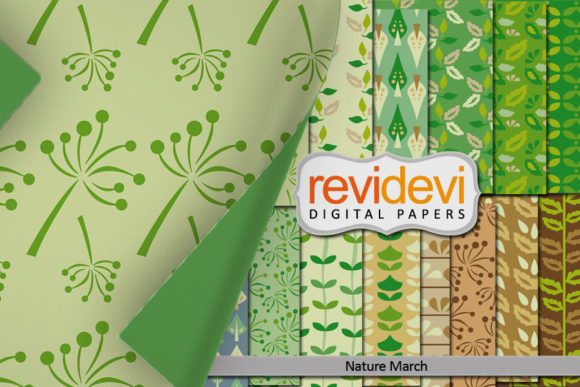
E-commerce sellers on platforms like Etsy or Shopify routinely use green botanical patterns in product photography backgrounds, packaging design, and social media templates. The investment is often low—licensed digital papers or vector packs are widely available—but the return can be felt in brand recall and perceived quality. A customer holding a thank-you card printed with delicate eucalyptus sprigs is more likely to remember the purchase than one holding a blank white slip.
Different Users, Different Checklists
Not everyone evaluates a nature pattern through the same filter. What matters most to a hobbyist scrapbooker may be irrelevant to a surface pattern designer licensing work to fabric manufacturers. Recognizing your own priorities before diving into downloads or purchases saves time and disappointment.
The Beginner's Lens: Easy Wins and Low Friction
Someone new to design or crafting often cares most about ease of use. They want patterns that are ready to print, pre-sized, and forgiving. Seamless repeats matter less if the project is a one-off greeting card. Color consistency across devices may not be a concern. What beginners value is speed and simplicity—drag, drop, print, enjoy. Free or low-cost Green Nature Patterns with simple licensing terms fit here perfectly. A watercolor leaf pattern in soft sage that can be used as a phone wallpaper or printed for gift wrap feels like a small victory. There is no steep learning curve, just immediate creative satisfaction.
The Professional's Checklist: Precision and Control
Experienced surface designers, textile artists, and branding professionals operate with a different set of standards. They inspect tile edges for seamless repetition. They check DPI and file formats. They ask about extended commercial licenses, exclusivity clauses, and vector scalability. A pattern that looks beautiful on screen but pixelates at 300 DPI on a bolt of fabric is a liability, not an asset.
For these users, Green Nature Patterns are raw material for deeper work. They might recolor a set of fern vectors in brand-specific hex codes, layer them with geometric elements, or use them as a starting point for an entirely new hand-drawn collection. Flexibility, layered file structures, and the ability to edit individual elements matter more than a pretty preview thumbnail. They are not just using a pattern; they are building on it.
Educators and Content Creators: Clear Purpose, Limited Budgets
Teachers and educational content creators look at nature patterns differently again. A preschool teacher might use leaf-patterned borders for classroom bulletin boards or phonics flashcards. A science educator might incorporate botanical illustrations into presentation slides about plant biology. For them, the pattern serves a functional and aesthetic double role. The visual appeal keeps learners engaged, but the content underneath drives the real work.
Budget is often tight. Free or low-cost resources with generous educational-use terms are highly valued. Simplicity wins here too—patterns that are not overly busy, so text remains readable when overlaid. A clean line-art ivy pattern in muted green works better for a worksheet header than a dense photographic jungle print.
Hobbyists and Makers: The Joy of the Process
There is a large and devoted community of crafters, journalers, sewists, and DIY enthusiasts who use Green Nature Patterns purely for personal projects. Bullet journal spreads with washi tape borders, hand-sewn pouches with leaf-print cotton lining, resin coasters embedded with pressed fern patterns—the list is endless. For this group, the experience of creating is the point. The pattern is a medium for mindfulness and self-expression, not a commercial tool.
Quality still matters, but it is evaluated through a tactile or emotional lens. Does the green feel warm or cold? Does the leaf shape evoke a specific memory or season? A pattern of gingko leaves in golden-green might feel like autumn nostalgia. A pattern of tropical palm shadows might feel like vacation energy. These subtle emotional cues guide hobbyist choices more than licensing terms or file specifications.
What to Look For Before You Commit
Whether you are downloading free patterns from a community site or purchasing a premium collection from an independent artist, a few practical checkpoints apply across the board. They help you match the resource to your actual need rather than just reacting to a beautiful preview image.
- Seamless tiling. If the pattern needs to repeat across a large surface—fabric, wallpaper, website background—confirm it tiles without visible seams. A quick mockup test saves grief.
- Color accuracy. Green is tricky. It shifts dramatically between screens and print outputs. If color fidelity matters (branding, product photography), look for CMYK-compatible files or test prints before full production.
- Resolution and scale. A pattern designed for digital screens at 72 DPI will not translate well to print. Know your final output dimensions and required resolution upfront.
- Licensing clarity. Personal use, commercial use, extended commercial use, and print-on-demand permissions are distinct categories. Read the terms. If they are vague, ask the creator before purchasing.
- File format and editability. Vector formats (AI, EPS, SVG) offer infinite scalability and easy color editing. Raster formats (JPEG, PNG, TIFF) are less flexible but often more accessible for beginners.
Mapping the Pattern to Your Project
No single green nature pattern works for every context. A dense tropical leaf pattern that energizes a café menu might overwhelm a meditation app interface. A delicate line-drawn herb pattern perfect for a tea brand might disappear on a large-format banner. Matching pattern density, style, and green tone to the project's mood and function is the skill that separates effective use from decorative noise.
Ask yourself a few honest questions. Is the pattern the hero or the backdrop? Will text sit on top of it? Does the audience associate this specific botanical style with a particular region, season, or value? A pattern of olive branches carries different cultural weight than a pattern of bamboo stalks. Both are green. Both are nature. But they tell different stories.
Where to Source Thoughtfully
Independent artists on platforms like Creative Market, Design Cuts, and Etsy offer unique Green Nature Patterns that stand apart from mass-market stock libraries. Supporting individual creators often yields more distinctive work and clearer communication about usage rights. For those on tight budgets, sites like Unsplash and Pixabay offer free nature photographs that can be cropped and repeated into simple patterns, though the result will lack the polish of purpose-built seamless designs.
Some designers also choose to create their own patterns from scratch—scanning pressed leaves, digitizing watercolor washes, or photographing moss and lichen for texture overlays. This path offers complete creative control and zero licensing concerns, at the cost of time and skill development. It is a rewarding route for makers who value uniqueness over speed.
The Quiet Longevity of Green
Trends in pattern design come and go. Neon geometrics, pastel abstracts, retro groovy swirls—each has its season. Green nature patterns, however, have a stubborn longevity that outlasts trend cycles. They are rooted in something older than design. A leaf is recognizable to every human who has ever walked outside. That shared visual vocabulary gives botanical patterns a cross-demographic readability that few other motif families can claim.
For a business owner choosing packaging that needs to feel relevant for five years, not five months, this longevity is practical protection against visual obsolescence. For a homeowner choosing wallpaper for a reading nook, it means the space will age gently. For a web designer building a portfolio site, it means the background will not scream 2024 in two calendar flips.
Green nature patterns reward thoughtful selection. When you match density to purpose, tone to audience, and format to output, the result is not just something that looks nice. It is something that works—quietly, reliably, across the varied ways real people create and live with the things they make.