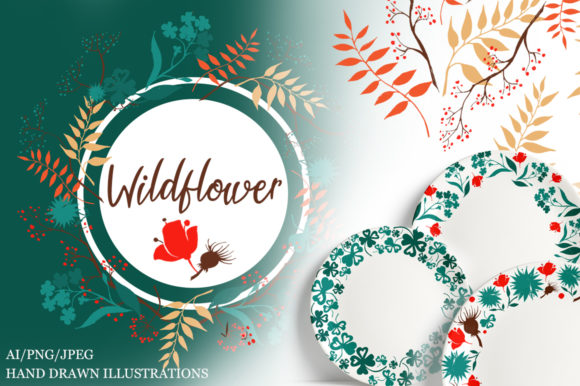
The Quiet Power of Wildflower Illustrations in Modern Visual Storytelling
There is something undeniably magnetic about a beautifully rendered wildflower. Unlike highly manicured botanical subjects, wildflowers carry an untamed, fleeting quality — a sense of place, season, and memory all pressed into a single bloom. Wildflower illustrations have moved far beyond the pages of dusty field guides. Today, they sit at the intersection of art, science, branding, and personal expression, offering a visual language that feels both nostalgic and remarkably fresh.
What makes these illustrations so compelling is not just their aesthetic charm. It is the way they communicate authenticity. In a digital landscape saturated with polished stock imagery and artificial perfection, the irregular petal edge, the slightly crooked stem, the delicate wash of watercolor — these imperfections signal something real. Designers, publishers, product developers, and content creators are rediscovering the unique ability of wildflower illustrations to evoke emotion without saying a word.
Why Wildflower Illustrations Resonate So Deeply
To understand their widespread appeal, you have to look beyond the surface. Wildflowers are universally recognized yet locally specific. A cornflower in one region might be a lupine in another. This duality — familiar but geographically rooted — gives wildflower imagery a chameleon-like flexibility. A single illustration can feel both personal and broadly accessible.
There is also a psychological layer at play. Wildflowers are associated with open meadows, unhurried summers, biodiversity, and resilience. They grow without permission, often in the most unlikely places. When these qualities are captured in an illustration, they transfer that same feeling of quiet strength and natural grace to whatever project they inhabit.
The Emotional Language of Botanical Art
Color plays an outsized role here. The muted mauves, buttery yellows, dusty blues, and soft sage greens commonly found in wildflower illustrations tap into a palette that feels restorative. Unlike aggressive, high-saturation graphics, these tones invite the viewer to slow down. They work with the eye rather than demanding attention. This is precisely why so many wellness brands, artisanal food companies, and sustainable fashion labels lean heavily into this aesthetic.
Where Wildflower Illustrations Fit Into Contemporary Workflows
It would be easy to assume that botanical illustration belongs in a niche corner of the creative world. The reality is strikingly different. Wildflower illustrations have become a go-to asset across disciplines that rarely overlap, from UI design to wedding stationery to large-scale mural work.
Consider the following practical scenarios where these illustrations are making an impact:
- Brand identity systems — Small-batch apothecaries, organic tea companies, and eco-conscious skincare lines use wildflower motifs to signal natural ingredients and handcrafted care.
- Editorial illustration — Magazines and digital publications commission wildflower artwork to accompany essays on nature, mental health, seasonal living, and slow food movements.
- Surface pattern design — Textile designers incorporate wildflower repeats into fabrics for home décor, apparel, and accessories, bridging the gap between rustic and refined.
- Environmental graphics — Interpretive signage for parks, nature reserves, and botanical gardens relies on accurate yet artistic wildflower renderings to educate and engage visitors.
- Digital products — App interfaces, website headers, and social media templates increasingly feature wildflower elements as a way to soften the tech-forward feel of digital spaces.
From Sketchbook to Screen: The Hybrid Workflow
Many illustrators now combine traditional media with digital refinement. A common workflow begins with loose pencil studies in the field, followed by ink or watercolor washes on paper. These physical pieces are then scanned at high resolution and adjusted in software like Adobe Photoshop or Procreate. The result is an asset that carries the warmth and texture of handmade work with the versatility of a digital file. Wildflower illustrations created this way can be recolored, resized, and layered without losing their organic soul.
Characteristics That Define Quality Wildflower Illustrations
Not all botanical artwork is created equal. When evaluating or commissioning wildflower illustrations, several technical and artistic factors separate the exceptional from the merely decorative.
Botanical accuracy is often the first filter. While creative license has its place, the most enduring wildflower illustrations tend to respect the structural truth of the plant — the number of petals, the arrangement of leaves, the growth habit. This accuracy does not constrain beauty; it anchors it. A knowledgeable illustrator understands how to observe the way a stem connects to a node, or how the light passes through a translucent petal.
Then there is compositional rhythm. Wildflowers naturally have a sense of movement. They bend, they cluster, they scatter. A skilled illustrator captures this dynamic energy rather than stiffly arranging specimens as if pressed in a book. The best pieces feel like you have stumbled upon a living patch of meadow.
Texture and depth also matter enormously. Whether rendered in gouache, colored pencil, or vector gradients, the surface quality of the illustration should invite closer inspection. Subtle paper grain, brush stroke variation, and layered transparency all contribute to an illustration that feels rich and tactile.
Style Spectrum: Realism to Whimsy
The stylistic range available today is vast. On one end, you have scientific-style illustrations with precise stippling, cross-hatching, and Latin nomenclature. On the other, you find loose, almost abstract interpretations where color and shape take precedence over detail. Between these poles lies a fertile middle ground — semi-realistic wildflower illustrations that are recognizable as specific species but rendered with expressive flair.
Choosing the right style depends heavily on context. A pharmaceutical company developing plant-based supplements would likely lean toward the more accurate end of the spectrum to convey trust and expertise. A children's book publisher might embrace a whimsical, storybook quality. An artisanal candle maker could gravitate toward moody, atmospheric wildflower line work. There is no single correct approach — only alignment with the message.
Practical Considerations When Using Wildflower Illustrations
If you are sourcing wildflower illustrations for a project, a handful of considerations can save time, money, and creative frustration. Licensing is a primary one. Many beautiful illustrations are available through stock platforms, but the licensing terms vary widely. Some allow unlimited commercial use; others restrict print runs or product quantities. Reading the fine print before you build a brand identity around a particular image is not optional — it is essential.
Another factor is file format and scalability. Raster-based illustrations, such as those created in watercolor and scanned, have resolution limits. For projects that require large-format printing — think wallpaper, banners, or vehicle wraps — vector formats or very high-resolution scans become non-negotiable. Some illustrators offer their work in both formats, but this is often something you need to request upfront.
Consistency across a set is also worth evaluating. If you are pulling multiple illustrations from different sources, subtle mismatches in line weight, color temperature, and shadow direction can create a disjointed visual experience. Commissioning a cohesive series from a single artist is often the preferable route for brands that need a unified look across packaging, web, and social content.
Teaching, Learning, and the Rise of Amateur Botanists
Beyond commercial use, wildflower illustrations have become a gateway practice for people seeking a slower, more observational hobby. The act of sitting with a plant and drawing it demands a particular kind of attention. You notice vein patterns, the way a bud unfurls, the exact shade where petal meets center. In an age of constant scrolling and fractured focus, this quiet concentration feels almost radical.
Workshops, online courses, and community groups centered around botanical drawing have surged in popularity. Many participants report that the practice changes not only how they see plants but how they experience the natural world. A walk through a familiar park transforms when you can identify self-heal, yarrow, or Queen Anne's lace — and when you understand their structures well enough to sketch them from memory.
The Citizen Science Connection
Interestingly, this renewed interest in wildflower illustration dovetails with broader movements in citizen science. Detailed observational drawings have historically been critical to botanical documentation, and that tradition continues. Some illustrators contribute their work to biodiversity databases, herbarium records, and conservation publications. What begins as a personal creative practice can, in some cases, contribute meaningfully to ecological knowledge and preservation efforts.
Why the Trend Is Not Fading
Trends in design are notoriously fickle, but the attraction to wildflower illustrations appears to have more staying power than a passing fad. The reason is grounded in a larger cultural shift toward biophilic design — the idea that humans have an innate desire to connect with nature. As our environments become more urban and more screen-bound, the counterbalance of organic, plant-referencing imagery becomes more psychologically necessary, not less.
Wildflower illustrations also align with values that consumers increasingly prioritize: sustainability, authenticity, locality, and mindfulness. A product wrapped in packaging that features hand-drawn local flora tells a story that a minimalist sans-serif label cannot. It whispers rather than shouts, and in a noisy marketplace, a whisper can be extraordinarily effective.
For businesses, artists, educators, and hobbyists alike, these illustrations offer something rare — a way to communicate that feels unhurried, genuine, and deeply human. Whether you are designing a logo, illustrating a field guide, printing fabric, or simply filling a page in a personal sketchbook, the wildflower holds its ground. It does not need to compete. It simply needs to be noticed.