The Abstract Language of Vertical and Horizontal Lines: How Two Simple Directions Shape Perception, Design, and Meaning
An abstract of vertical and horizontal line is far more than a primitive mark on a surface. It represents a foundational axis of human understanding. These two orientations frame our physical experience of the world, from the horizon stretching across the landscape to the upright posture of the human body. Across disciplines ranging from fine art and architectural theory to data visualization and user interface design, the vertical and the horizontal communicate fundamentally different states of being. One suggests stability, rest, and equilibrium. The other implies growth, aspiration, and tension. Together, they form the invisible scaffolding upon which we construct visual narratives.
The Geometry of Perception: Why Direction Matters
Human beings are terrestrial creatures. Our primary orientation is defined by gravity. The horizontal line corresponds to the ground we walk on, the surface of water, the resting position of the body in sleep. It reads as calm, stable, and resolved. The vertical line, by contrast, defies gravity. It is the tree reaching upward, the standing figure, the spire of a cathedral. It suggests effort, alertness, and spiritual transcendence. This is not arbitrary symbolism. It is deeply rooted in embodied cognition, a field of study that examines how our physical experience shapes abstract thought.
When a viewer encounters a composition dominated by strong horizontals, the eye moves laterally across the frame with a sense of ease. There is no visual obstacle to overcome. When verticals dominate, the eye is compelled to move upward or downward, engaging a different set of muscles and psychological associations. An abstract of vertical and horizontal line can therefore be understood as a dialogue between these two perceptual modes. The interaction between them creates dynamic tension or harmonious balance depending on their proportions, placement, and relationship to the frame.
The Horizontal Line in Art and Visual Culture
Landscape painters have long understood the emotive power of the horizontal. The horizon line anchors a composition, providing a baseline against which all other elements are measured. In the works of J.M.W. Turner or the serene seascapes of Hiroshi Sugimoto, the horizon becomes almost a philosophical proposition. It divides the known from the unknown, the material from the atmospheric. Designers of modern interfaces rely on the same principle. Horizontal navigation bars, progress indicators, and baseline grids all leverage our instinctive reading that horizontal equals stable progression.
In typography, the horizontal baseline of text is so fundamental that we rarely notice it. Letters sit upon an invisible line that ensures readability. When that line is disrupted, through angled or curved baselines, reading becomes effortful. The horizontal is the default state of visual quiet. It does not demand attention, yet its absence creates immediate discomfort. This is why an abstract of vertical and horizontal line often begins with the recognition that horizontals provide the canvas—the ground upon which action unfolds.
The Vertical Line as Symbol and Structure
If the horizontal represents the given, the vertical represents the achieved. Tall buildings, towering monuments, and standing stones all speak of human ambition. In Gothic architecture, the vertical line is exaggerated to extraordinary degrees, drawing the eye upward toward vaulted ceilings and spires that seem to dissolve into light. The psychological effect is one of awe and transcendence. Contemporary skyscrapers continue this tradition, using glass and steel to create vertical shafts that define city skylines.
In portrait photography, the vertical format naturally accommodates the human figure. A standing subject fills a vertical frame with presence and dignity. Portrait orientation in smartphones and digital displays has become so dominant that it has reshaped content creation. Social media platforms like Instagram and TikTok are built around the vertical video format. This represents a significant shift from the cinematic horizontal that dominated visual media for a century. The abstract of vertical and horizontal line, in this context, becomes a matter of cultural and technological negotiation.
Intersections and Grids: Where Lines Meet
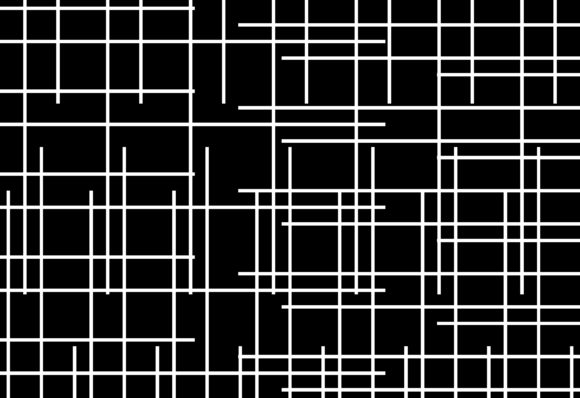
Single lines are expressive, but the intersection of vertical and horizontal lines creates structure. The grid is one of the most powerful conceptual tools in human history. Maps are grids. Spreadsheets are grids. The layout of cities from ancient Rome to Manhattan follows orthogonal principles. When vertical and horizontal lines intersect, they establish coordinates, making space measurable and navigable. The grid imposes order on chaos.
In graphic design, the grid system organizes content into readable hierarchies. Columns flow vertically, while rows establish horizontal relationships. This dual-axis framework allows designers to create complex layouts that remain intuitive. The Swiss Style of the mid-twentieth century elevated grid-based design to an art form, demonstrating that an abstract of vertical and horizontal line could yield results of extraordinary clarity and elegance. Designers like Josef Müller-Brockmann treated the grid not as a constraint but as a liberating structure that enabled pure visual communication.
Practical Applications in Digital Interfaces
User experience designers work daily with the tension between vertical and horizontal space. Web pages scroll vertically, a convention so ingrained that users rarely question it. Horizontal scrolling, by contrast, often confuses and frustrates unless clearly indicated as an intentional interaction pattern. Mobile applications employ vertical lists, vertical feeds, and vertical navigation stacks. The thumb moves upward, the content flows downward. Understanding the abstract of vertical and horizontal line helps designers make informed decisions about layout, gesture, and information architecture.
Data visualization offers another compelling domain. Bar charts can be oriented vertically or horizontally. The choice is not neutral. Vertical bars emphasize comparison through height, which reads as magnitude overcoming gravity. Horizontal bars, particularly effective for ranking long lists of categories, prioritize legibility of labels and sequential reading order. The same data tells a different story depending on this fundamental orientation.
- Vertical bar charts: Ideal for time series data, conveying growth, decline, and cyclical patterns with visual drama.
- Horizontal bar charts: Superior for categorical comparisons with lengthy labels, reducing cognitive load.
- Scatter plots: Depend entirely on the intersection of vertical and horizontal axes to reveal correlations.
- Timeline designs: Typically horizontal to suggest chronological flow and narrative continuity.
Cultural Variations and Historical Context
The meanings attributed to vertical and horizontal lines are not universal. Some cultures emphasize verticality more strongly in their visual traditions. Classical Chinese landscape painting, for instance, often employs vertical hanging scrolls that invite the viewer to journey upward through misty mountains and waterfalls. The horizontal handscroll, equally important, offers a different mode of engagement, one of gradual unfolding and temporal progression. Both formats coexist within the same artistic tradition, each suited to different expressive purposes.
In Islamic art and architecture, the interplay of vertical and horizontal lines reaches extraordinary sophistication. Calligraphic inscriptions stretch horizontally across walls and friezes, while minarets punctuate the skyline with vertical emphasis. The abstract of vertical and horizontal line here takes on spiritual significance, mapping the relationship between the earthly realm and the divine. Geometric patterns that radiate from central points reconcile both directions in unified visual systems of remarkable complexity.
Psychological Responses and Emotional Resonance
Research in environmental psychology has demonstrated that different spatial configurations affect mood and cognitive performance. Rooms with low horizontal ceilings can feel oppressive, while those with pronounced vertical proportions can feel uplifting. Hospital rooms designed with horizontal landscape views have been shown to speed patient recovery. The lines that define our spaces are not neutral. They continuously shape our emotional states.
An abstract of vertical and horizontal line, when deliberately manipulated by artists or designers, can evoke specific emotional responses. The calm, quiet dignity of a horizontal composition suits meditation and contemplation. The energetic thrust of vertical elements suits motivation and action. Combining the two in a cross or intersection can suggest meeting points, decisions, or spiritual convergence. These are not esoteric concerns. They are practical considerations for anyone creating visual work intended to move an audience.
Mathematical and Scientific Perspectives
In coordinate geometry, the vertical y-axis and horizontal x-axis provide the foundation for visualizing mathematical relationships. René Descartes' insight that algebraic equations could be represented as geometric forms depends entirely on this orthogonal framework. The abstract of vertical and horizontal line thus underlies centuries of scientific progress. From the trajectory of projectiles to the modeling of economic trends, the perpendicular axes enable precise representation of complex phenomena.
In physics, the vertical direction aligns with the gravitational field vector. Structures must account for vertical loads and horizontal forces differently. Engineers calculate stresses along both axes to ensure stability. The same principle applies at the molecular scale, where crystalline structures often exhibit orthogonal arrangements of atoms. The pervasiveness of vertical and horizontal organization across scales of reality suggests something fundamental about these directions.
Creative Exploration and Breaking Conventions
Understanding conventions is the prerequisite for meaningful innovation. Artists who deliberately subvert the expectations associated with vertical and horizontal lines can produce works of startling impact. A canvas tilted at forty-five degrees immediately introduces energy and instability. Photographers who shoot from unconventional angles transform familiar scenes into abstract compositions where vertical and horizontal lose their usual meanings. An abstract of vertical and horizontal line, when deconstructed, opens possibilities for entirely new visual languages.
Abstract expressionist painters like Barnett Newman explored the vertical line, or "zip" as he called it, as a primary expressive element. His large-scale canvases divided by single vertical bands force an encounter with the line itself, stripped of representational content. The experience is immediate and physical rather than intellectual. Viewers report sensations of spatial disorientation and heightened awareness. This demonstrates how deeply the vertical line resonates with human perception even in its simplest form.
Architecture and the Built Environment
The built environment is fundamentally a negotiation between vertical and horizontal forces. Floor plates extend horizontally to create usable space. Columns and walls rise vertically to support them. The proportions between these elements define architectural character. A low, wide building reads as grounded and approachable. A slender tower reads as aspirational and exclusive. The abstract of vertical and horizontal line in architecture shapes not only individual buildings but entire urban environments and the social dynamics they contain.
Interior designers manipulate ceiling height, window proportions, and furniture orientation to create desired atmospheres. A room with strong horizontal emphasis through low furniture and wide windows encourages relaxation and social interaction. A space with vertical emphasis through tall bookcases, floor-length curtains, and upward-directed lighting encourages focus and formality. These principles are applicable at every scale, from private residences to public institutions.
Photography and Cinematic Composition
Photographers and cinematographers are trained to see the abstract of vertical and horizontal line in every scene. The horizon must be level unless a deliberate tilt serves the narrative. Leading lines—roads, fences, architectural details—guide the viewer's eye through the frame. A strong vertical element in the foreground can provide a sense of scale and depth. The rule of thirds, a compositional guideline that divides the frame with two horizontal and two vertical lines, remains foundational despite countless variations and exceptions.
In cinema, the shift from horizontal wide shots to vertical close-ups changes the psychological register of a scene. Establishing shots set context with expansive horizontals. Intimate moments often favor vertical compositions that isolate characters and emphasize their emotional states. Editors and directors work intuitively with these principles, but conscious awareness of the abstract of vertical and horizontal line can elevate technical craft into intentional artistry.
Practical Considerations for Creators and Business Owners
For those who commission or create visual work, understanding the language of lines translates into better decisions. A logo design that combines strong verticals with a stable horizontal base communicates reliability and ambition simultaneously. A website layout that respects the vertical flow of reading while providing clear horizontal anchoring points feels both comfortable and dynamic. Marketing materials that strategically use directional cues guide attention toward calls to action.
The investment in grasping an abstract of vertical and horizontal line pays dividends across every visual decision. It is not necessary to become a theorist. It is valuable to develop sensitivity to how these fundamental directions affect perception and response. The most effective visual communicators are those who can articulate why something works, not merely that it does. The language of lines provides a vocabulary for such articulation.
Looking Forward: Evolving Conventions
Digital technology continues to reshape our relationship with vertical and horizontal space. Foldable screens challenge the fixed aspect ratio. Virtual and augmented reality environments introduce full spatial immersion where vertical and horizontal are no longer bounded by frames. Generative art and artificial intelligence produce compositions that explore directional relationships in ways humans might not conceive independently. Yet even as the mediums evolve, the fundamental perceptual principles remain. An abstract of vertical and horizontal line will continue to be relevant because it describes something irreducible about human experience in a gravitational world.
The ongoing dance between these two primordial directions is not a solved problem but an enduring source of creative possibility. Each generation discovers anew the expressive potential of the vertical reaching upward and the horizontal extending outward. The line, in its beautiful simplicity, remains one of the most potent tools available to anyone who seeks to communicate visually.