Mermaid Digital Papers Patterns: A Versatile Visual Asset for Modern Creatives
Finding the right background or decorative element can quietly make or break a project. Whether you are designing a product label, assembling a client presentation, or crafting a printable that needs to feel cohesive and polished, the surface texture matters. Mermaid Digital Papers Patterns refers to a specific category of digital graphics—high-resolution, often seamlessly repeating textures that draw inspiration from ocean mythology, iridescent scales, and soft aquatic color palettes. These files are designed to be downloaded and used across endless applications, giving creators a shortcut to a distinctive, whimsical-meets-professional aesthetic without having to illustrate everything from scratch.
For many professionals and serious hobbyists, stock photography or flat vector backgrounds can feel overused. The subtle shimmer of a scale pattern or the organic flow of watercolor-like underwater motifs brings a tactile quality to digital work. It stands out in a crowded marketplace where visual differentiation is increasingly important. Understanding what this type of resource really offers—and where it might fall short—can help you decide if it earns a place in your toolkit.
What Exactly Are Mermaid Digital Papers Patterns?
At their core, these are downloadable files, usually in JPG or PNG format, that contain repeating or tileable patterns. Many designers also offer layered PSD or vector formats. The phrase “digital papers” comes from the scrapbooking and stationery world, where creators print the patterns onto cardstock to use as backgrounds for albums, cards, or journal pages. But today their use has expanded far beyond that origin. A single pattern might serve as a blog header backdrop, a packaging wrap, a social media graphic, a fabric print mockup, or even a website section divider.
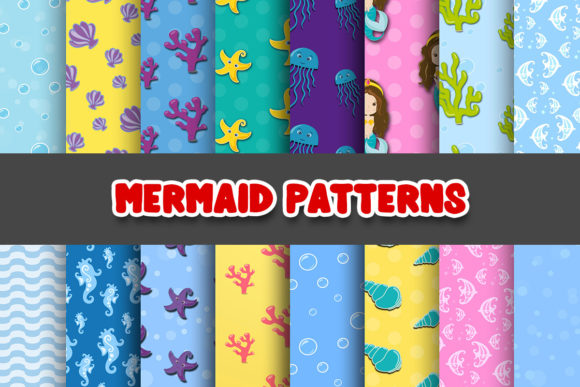
The “mermaid” theme generally includes several recurring visual motifs: layered scales reminiscent of fish or mythical tails, shells, pearls, gentle wave lines, abstract water reflections, and occasional coral or starfish silhouettes. Color palettes lean toward seafoam greens, lavender, blush pink, muted teal, and soft metallic golds or holographic sheens. The best of these collections maintain a delicate balance—they feel ethereal without becoming cartoonish, making them suitable for both playful children’s products and sophisticated branding projects.
Key Characteristics That Define Quality
Not all pattern packs are created equal. When evaluating a set of mermaid digital papers, several technical and aesthetic factors determine real-world utility.
Resolution and Print-Readiness
Most reputable packs offer 300 DPI (dots per inch) resolution at sizes like 12×12 inches. This ensures that the paper can be printed at full size for physical goods without pixelation. Mermaid Digital Papers Patterns that lack this specification may disappoint when you try to use them for anything beyond low-resolution screen display. Check the individual product details—a 72 DPI web-optimized file will not translate well to a printed notebook cover or a high-quality flyer.
Seamless or Tileable Construction
True digital papers should repeat without visible seams. When you drag a small square across a larger canvas in Photoshop or Canva, the edges must align perfectly. Poorly constructed repeating patterns show abrupt cuts, jarring lines, or obvious duplication marks. The best mermaid patterns use offset filtering and careful manual blending so that scales flow continuously. This seamlessness is critical for wide-format printing, fabric design, and wrapping 3D objects in mockups.
Color Consistency and File Integrity
A cohesive aesthetic across all papers in a pack matters. If one pattern is neon turquoise while another is muddy gray-blue, the set loses its professional edge. Consistent, well-calibrated colors mean you can mix patterns from the same collection across different brand assets without visual discord. Also, clean file naming, organized folder structures, and inclusion of preview images save time when you’re working under a deadline.
Licensing and Commercial Use Clarity
One of the most practical considerations is licensing. Many designers sell their patterns with a standard commercial use license, allowing you to incorporate them into products you sell, such as printed invitations, planner inserts, or physical merchandise. However, some restrict usage on print-on-demand sites or prohibit reselling the papers as-is. Always read the license; a pack that seems inexpensive can become a liability if you violate terms unknowingly. Clear, generous commercial terms add tremendous long-term value for small business owners and freelancers.
Where These Patterns Shine in Practice
Understanding theoretical quality is one thing. Seeing how they hold up in actual workflows reveals the practical weight of the investment.
A stationery designer launching a new invitation suite might layer a subtle scale pattern behind the event text, adjusting opacity to keep the design legible yet rich. Because the paper is high-res and seamless, it stretches to fit any card ratio without distortion. A blogger wanting cohesive Pinterest pins could use a single mermaid paper as a branded background across dozens of graphics, establishing instant recognition without looking repetitive—each pin’s text overlay changes, but the ethereal texture stays constant.
For educators creating classroom decor bundles, these patterns can become binder covers, alphabet chart borders, and reward stickers. The gentle underwater theme appeals to young learners without being overly gendered or loud. A product photographer or small business owner selling handmade soaps or candles might use the patterns as subtle branding layers in lifestyle photos, digitally placing the product on an edited background that echoes the sea-inspired ingredients.
In digital products themselves, such as printable planners, journal kits, or social media template shops, Mermaid Digital Papers Patterns provide immediate visual value. Customers buying a planner expect a beautiful interior; the right pattern reduces design time while increasing perceived product quality. Freelancers building client brands can achieve a custom-illustrated feel at a fraction of the time and cost, though it’s important to modify and layer the papers enough that the result doesn’t look like a template anyone could download.
Flexibility Across Software and Skill Levels
A major strength of digital paper patterns is their broad compatibility. They import directly into Canva, Adobe Photoshop, Illustrator, Procreate, Affinity Designer, and even simpler tools like PicMonkey or Microsoft Publisher. This means you don’t need advanced editing skills to get started; you can drag a file onto a canvas, crop, and adjust transparency. Professional users benefit from the ability to blend modes, apply clipping masks, or use pattern overlay functions for more complex compositions.
However, some packs include layered files that let you isolate elements—such as separating a gold foil scale layer from a matte background. This level of control is especially useful for designers who need to match brand colors precisely or create different colorways from a single base pattern. If you frequently customize assets for different campaigns, look for patterns delivered with editable smart objects or separated elements.
Limitations and Points to Watch For
Even a well-made pack has constraints. The mermaid aesthetic, while popular, is inherently thematic. If your brand identity is minimalist, industrial, or strictly corporate, these patterns might feel at odds with your core voice. Using them sparingly as accents rather than dominant backgrounds can bridge that gap, but it’s worth assessing whether the style aligns with your long-term direction before buying.
Another common issue is file compression. Some vendors heavily compress JPGs to reduce download size, introducing subtle artifacts that become visible when printing large formats or zooming in closely. Always test-print a small section on quality paper before committing to a large run of physical products. Similarly, if a pattern relies heavily on metallic or holographic effects that are simulated digitally, the printed result on standard printers will not have actual reflectivity—managing client expectations here is key.
There is also a risk of overuse if you rely on the exact same pattern pack as dozens of other creators in your niche. While end consumers rarely trace a background to its source, a crowded market of similar-looking planners or social posts can dilute the uniqueness you bring. Smart creators treat these patterns as raw materials: they combine elements, recolor, overlay textures, and integrate original graphics so the final output feels uniquely theirs.
Who Gains the Most Value?
Based on how these assets perform in various scenarios, certain roles stand to benefit immediately:
- Small business owners and product sellers: Elevate packaging, labels, thank-you cards, and website backgrounds without the expense of custom illustration.
- Freelance graphic designers and content creators: Expand a resource library quickly, delivering polished client work on short timelines.
- Educators and homeschooling parents: Create visually engaging worksheets, posters, and organizational labels that hold children’s attention.
- Bloggers and social media managers: Maintain a consistent, beautiful feed aesthetic that stands out without requiring daily original photography.
- Printable shop owners and digital product creators: Build attractive, cohesive product listings that increase the perceived value of digital downloads.
For these groups, the time saved and the visual consistency gained often outweigh the cost of a quality pattern pack many times over. However, a casual hobbyist making a single scrapbook page might find more value in a smaller, cheaper set, while a large agency might need exclusive rights or fully custom work that a marketplace download cannot provide.
Long-Term Value and Reusability
Unlike a one-off stock photo that becomes dated, a well-designed seamless pattern can remain useful for years. Its value compounds each time you repurpose it across different media, campaigns, or client projects. The key is choosing a set that is timeless enough within its theme. Overly trendy color combinations or heavily stylized ’90s clip-art mermaids might age poorly, while sophisticated scale textures with neutral undertones adapt more readily to shifting design trends.
Purchasing from independent artists often means you get access to updates or extended licenses later. Some creators also offer bundles where the cost per pattern drops significantly, making it economical to buy a larger collection you can draw from gradually. Because files sit on a hard drive, there is no degradation over time, unlike physical supplies—this makes them a sustainable investment for anyone producing regular visual content.
A Practical Checklist Before You Buy
If you are considering adding a set of Mermaid Digital Papers Patterns to your assets, a few simple checks can prevent frustration:
- Confirm DPI and pixel dimensions—300 DPI at minimum 3600×3600 pixels for serious print work.
- Test seamlessness by opening one tile and repeating it manually in a large canvas.
- Review the license thoroughly, looking for restrictions on selling physical items, digital products, or print-on-demand usage.
- Evaluate the color palette: does it support your brand’s existing tones, or would it require heavy editing to fit?
- Check reviews or preview images to spot blurriness, banding, or inconsistent lighting across the set.
- Look for included bonuses such as coordinated solids, pre-made layered templates, or bonus clip art that expand utility.
Doing this due diligence takes a few minutes but protects you from investing in files that look beautiful in thumbnails but fail in real applications.
Integrating the Patterns Into a Cohesive Workflow
Successful use often comes down to thoughtful integration rather than a simple drop-and-go approach. For example, a marketer running a campaign for a skincare line might use a soft mermaid scale pattern as a secondary element—layered under product shots at 15% opacity, used as a thin border on social graphics, and printed on the inside of box lids for a surprise brand moment. The repetition of the motif across touchpoints creates subtle brand recognition without screaming “theme.”
For those working in Canva or similar browser-based tools, organizing these patterns into brand folders with clear labels streamlines the design process for teams. If multiple people need access, ensure your license covers extended user rights. Many independent sellers are open to negotiating if you explain your intended use professionally.
In the end, mermaid digital papers are more than a fleeting trend. They represent a convergence of classic organic texture and digital precision—a useful building block for anyone who needs to add depth, softness, and a hint of story to their visual communications. The practical value lies not in the novelty of the theme but in the quality of the execution, the clarity of the usage rights, and how creatively you weave the patterns into the fabric of your own work. Approached with a clear understanding of both their strengths and their boundaries, these assets can quietly power countless projects without demanding the spotlight.