Cacti Seamless Pattern Ideas and Uses
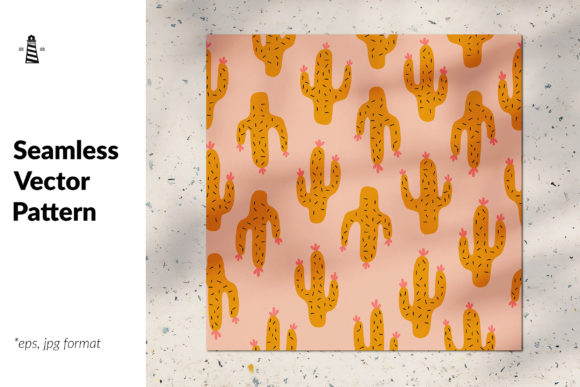
A cacti seamless pattern is a repeating tile design featuring cactus motifs that flows without visible edges. These patterns blend botanical charm with clean geometric repetition. They've found their way into fabric, wallpaper, digital backgrounds, stationery, and branding because they offer something hard to pin down yet instantly recognizable. A touch of arid warmth, a nod to resilience, and a visual texture that feels both modern and timeless.
What makes a seamless pattern interesting isn't just the subject matter. It's the rhythm. A well-designed cacti seamless pattern creates movement across a surface. The eye travels from one prickly pear pad to a saguaro silhouette, then lands on a small barrel cactus, then starts the journey again. That sense of continuity makes the design feel intentional rather than decorative afterthought.
Designers and creators gravitate toward these patterns for practical reasons too. Cacti are sculptural by nature. Their distinctive shapes translate well into vector silhouettes, line art, watercolor-inspired washes, and bold flat-color blocks. A single cacti seamless pattern can house six or seven different species without feeling cluttered if the spacing and scaling are handled with care. That variety within a single repeat tile is part of the appeal.
Why Cacti Motifs Work Across So Many Contexts
Cacti carry unexpected emotional weight in design. They symbolize endurance, patience, and thriving in harsh conditions. Those associations give a cacti seamless pattern more depth than a generic floral or abstract geometric might provide. When someone wraps a notebook or phone case in a cactus print, they're choosing imagery that communicates something about adaptability and quiet strength, even if that message stays subconscious.
From a purely visual standpoint, cactus shapes offer crisp outlines and distinctive negative space. A saguaro's arms create a recognizable silhouette in a single glance. Prickly pear pads stack and overlap in ways that naturally suggest layering. Aloe-like rosettes and agave spikes bring radial symmetry into the mix. All of these elements give pattern designers a rich toolkit for building repeats that stay engaging even after dozens of repetitions.
Color palettes also play a role. Many cacti seamless patterns lean into warm desert tones: terracotta, sand, olive, dusty coral, deep indigo sky. Others go pastel and playful, turning a spiny plant into something soft and whimsical. Either direction works because the cactus form is versatile enough to absorb the mood of the color story wrapped around it.
Exploring Style Variations and Creative Directions
Not every cactus pattern serves the same purpose. The style of rendering changes everything about how a cacti seamless pattern lands with an audience. Here are a few distinct approaches designers often explore:
- Line art minimalism. Thin, consistent strokes outline each cactus with no fill color. These patterns feel airy and work beautifully on stationery, glassware, or light backgrounds where you want the pattern to whisper rather than shout.
- Bold geometric. Cacti are broken down into angular facets, almost like stained glass or low-poly 3D models. This style pairs well with mid-century modern branding or textile designs that need a graphic punch.
- Watercolor botanical. Soft washes of pigment give each cactus a hand-painted feel. These patterns suit wedding invitations, art prints, and anything that leans toward organic, artisanal aesthetics.
- Retro desert kitsch. Think 1950s Palm Springs. Bright greens, pinks, and yellows with playful proportions. These patterns thrive on tote bags, apparel, and home decor aimed at a nostalgic audience.
- Dark and moody. Cacti silhouetted against deep backgrounds, sometimes with celestial elements like stars or moons woven into the repeat. These patterns appeal to witchy, bohemian, or gothic-leaning consumer niches.
Each style solves a different problem. A stationery designer looking for wedding suite elements needs something different from a small business owner sourcing patterns for enamel pin backing cards. Recognizing which direction fits which application saves time and leads to more cohesive final products.
Practical Applications Across Industries
A cacti seamless pattern isn't just a pretty arrangement of plants. It's a functional design asset with real-world utility. Let's walk through how different professionals put these patterns to work.
Textiles and Apparel
Clothing brands use cactus patterns on button-up shirts, summer dresses, scarves, and swimwear. The seamless nature of the repeat means fabric can be cut at any angle without awkward breaks. A pattern dominated by vertical saguaros might get rotated 90 degrees for a different garment piece, and it will still read as intentional. Fabric designers often adjust the scale based on the garment type: a larger repeat for a maxi dress, a tighter tile for a tie or pocket square.
Stationery and Paper Goods
Notebooks, planners, gift wrap, greeting cards, and sticker sheets all benefit from botanical repeats. Paper goods buyers tend to respond well to cacti patterns with a slightly more detailed or whimsical touch, since these products are often purchased as small luxuries or gifts. A repeating cactus pattern on the inside cover of a planner turns a utilitarian object into something that feels personal and uplifting to use every day.
Digital Products and Web Design
Content creators, bloggers, and entrepreneurs use seamless patterns as website backgrounds, social media templates, digital planner inserts, and presentation slide textures. The key here is subtlety. A pattern that works brilliantly on a tote bag might overwhelm text readability when used as a full-page web background. Many designers offer the same cacti seamless pattern in multiple opacity levels or with tone-on-tone colorways specifically for digital use.
Home Decor and Surface Design
Upholstery, throw pillows, curtain fabric, removable wallpaper, and ceramic tile decals all draw from the seamless pattern world. Home decor applications often demand a larger repeat size and a more muted or sophisticated palette than fashion or paper goods. A cactus pattern on a velvet cushion in dusty sage and clay reads as understated elegance rather than novelty.
Branding and Packaging
Small businesses in the wellness, plant, boutique hotel, and artisanal food spaces frequently incorporate botanical repeats into their visual identity. A cacti seamless pattern might become the tissue paper inside a boutique shopping bag, the pattern on a product box interior, or a subtle background texture on a website's hero section. Because cacti feel both distinctive and broadly appealing, they can help a brand stand out without alienating a wide audience.
Designing or Choosing a Pattern That Works
Whether you're creating your own pattern or selecting one from a marketplace, a few practical considerations help ensure the result serves its purpose effectively.
Pay attention to repeat direction. Some patterns flow naturally in all directions, while others have a subtle up-and-down orientation. A directional pattern can still be seamless, but it might feel odd if rotated or used on a product viewed from multiple angles. Test the pattern in its intended context before committing.
Scale matters more than you think. A cactus repeat that looks balanced on a screen at 100% zoom might feel completely different when printed at actual size on a 20-inch pillow case. Mock up the pattern at real dimensions. If the cacti are too large, the repeat becomes the focal point rather than a background texture. Too small, and the detail gets lost in visual noise.
Check the density. A very dense pattern with tightly packed cacti and minimal negative space creates a busier, more energetic surface. An open, airy layout with generous spacing feels calmer. Neither is wrong, but the density should match the intended mood and context. Busy patterns can overwhelm text-heavy layouts; sparse patterns can feel underwhelming on products where the pattern is the main attraction.
Color contrast and legibility. If the pattern will sit behind text, logos, or product images, ensure the contrast is low enough that the main content remains readable. Many designers offer multiple colorway options for a single pattern tile precisely because different use cases demand different levels of visual prominence.
Adapting the Pattern for Different Audiences
One of the most practical skills creatives can develop is learning to tailor an existing design asset to multiple audiences. A cacti seamless pattern designed for a nursery brand will likely feature soft colors and rounded, friendly shapes. The exact same layout with a different color palette could suit a trendy bar or restaurant interior. The structural design work is done; the adaptation lies in color, scale, and context.
Educators might use a simplified cactus pattern as a classroom decoration, printed at large scale on bulletin board backgrounds. A freelance social media manager could layer it subtly into Instagram story templates for a lifestyle client. A hobbyist making custom tumblers with epoxy and glitter might need the pattern at a specific scale to fit within a curved surface template. Each use case requires slight adjustments to the same foundational asset.
Understanding your end user's context transforms how you present or select a pattern. If you're selling digital pattern downloads, include notes about ideal scale ranges, suggested product applications, and whether the tile works best as a full-bleed or contained repeat. That practical information increases the perceived value of the resource and helps buyers make confident decisions.
Keeping Results Original and Audience-Friendly
With so many cactus patterns available across marketplaces and design platforms, originality becomes a practical challenge. The goal isn't to invent a new plant species or break every convention. Small, deliberate choices add up to a pattern that feels distinct.
Combine cactus elements with unexpected pairings. Geometric cacti alongside delicate wildflowers. Night-blooming cereus flowers woven into the repeat. Tiny desert critters like lizards or moths scattered sparingly throughout the tile. These additions don't detract from the cactus focus; they build a richer visual world that rewards closer inspection.
Vary the species selection and spacing. Many cactus patterns default to the same three or four iconic shapes. Researching lesser-known species like cholla, organ pipe cactus, or claret cup cactus provides fresh silhouettes that most patterns skip. That botanical specificity also appeals to plant enthusiasts, who appreciate the nod to real diversity over generic shapes.
Test the pattern's emotional tone. Show the design to someone unfamiliar with the project and ask what it makes them feel. If the pattern is meant to be calming and they describe it as busy, adjust the spacing. If it's supposed to be playful and it reads as serious, shift the color saturation or the line quality. Simple feedback loops prevent a pattern from missing its intended mark.
Production and File Considerations
For creators selling or sharing their work, the technical delivery matters as much as the visual design. A seamless pattern tile should be tested for edge matching before being listed or sent to print. Most designers run a quick test by applying the tile to a large canvas and checking for visible seams at the tile boundaries. Even one misaligned pixel breaks the illusion.
Provide pattern files in standard formats suited to the intended use. Vector files like SVG or AI work for scalable applications. High-resolution PNG tiles with transparent backgrounds suit digital products and some print-on-demand platforms. Some sellers include pre-made swatch files for Photoshop or Procreate, which lowers the barrier for hobbyists and casual users who want to experiment without deep technical knowledge.
A thoughtfully packaged cacti seamless pattern includes not just the tile but example mockups, a basic license overview, and notes on recommended applications. That completeness builds trust and reduces the back-and-forth of customer questions. It also demonstrates the kind of professionalism that repeat buyers remember.
Moving From Inspiration to Action
The gap between admiring a pattern and using it effectively is where most people stall. The best way forward is to pick one specific project and let constraints guide decisions. A small business owner refreshing product packaging doesn't need to evaluate every possible cactus pattern. They need one that matches their brand colors, prints cleanly on their packaging material, and feels authentic to their voice. Starting with those concrete filters turns an overwhelming search into a straightforward selection process.
For designers, the creative challenge shifts from "make something beautiful" to "make something useful for a particular person in a particular situation." A pattern designed with a clear use case in mind, whether that's nursery curtains or coffee shop menus, will nearly always resonate more strongly than a pattern designed in isolation. The seamless tile is a means to an end. Understanding the end shapes everything about the process, from color choices to element density to overall mood.
A cacti seamless pattern carries more creative potential than most people realize. It can anchor a brand, elevate a product, or turn a simple digital layout into something memorable. Like the plants themselves, these patterns adapt to a wide range of conditions and thrive with a bit of thoughtful care applied at the right moments.